Sew-Ins for Thinning Hair: When They Help, and When They Don’t
By BRAIDS BY AMY | October 8, 2026
I’ve had clients come to me after relocating and feeling nervous about finding a new braider who’s detail-oriented, ethical, and actually listens. If you’re dealing with thinning hair, sew-ins can help fast by adding coverage and volume, but only when your scalp and the hair you still have are healthy enough to hold a braided base. If your scalp is irritated or your hair is too fragile to anchor braids, a sew-in can make things worse.
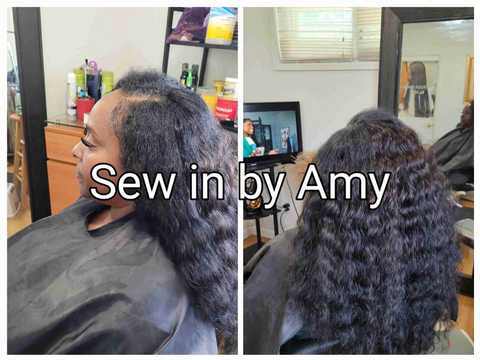
My honest take: A sew-in is a good match for thinning hair when I can keep the install low-tension, use lighter wefts, and schedule maintenance checks so the foundation stays clean and comfortable.
Thinning hair doesn’t look the same on everyone, and the cause matters
Thinning can show up as a wider part, a sparse crown, or edges that don’t feel as full as they used to. Sometimes it’ gradual. Sometimes it’ right after a stressful season, tight styles, or a stretch of back-to-back installs with not enough breaks.
I can’t diagnose hair loss in a braid shop setting, but I can tell you what I see all the time: hair that’s thinning usually needs less tension and less weight, not more. That’s why choosing the right protective style for thinning hair is a bigger decision than just picking a look from a photo.
If you’re in Henrico, especially around the Tuckahoe and West End area near Short Pump, I meet a lot of busy commuters and parents who want coverage that holds up through humid summers and packed schedules. A sew-in can be low-maintenance day to day, but only if it’ installed and cared for with thinning hair in mind.
How sew-in extensions cover thinning hair without fighting your natural texture
A sew-in works by building a braid foundation (your base), then sewing the wefts onto that foundation. For thinning hair, the win is coverage: the wefts sit over the sparse areas, so you’re not trying to “style around” your crown or keep fluffing the same spot all day.
But the foundation is everything. When I install sew-ins for thinning hair, I focus on:
- Low-tension braids so your scalp isn’t throbbing and your hairline isn’t stressed.
- Looser parting and smart braid placement so the weakest areas aren’t doing the heavy lifting.
- Lightweight wefts so you get volume without dragging your braid base down.
- Comfort checks during the appointment. I stay on it, because too tight in the chair is too tight at home.
That last point isn’t small. One of my clients described how I “consistently checked on me to make sure the braids weren't too tight and that I was comfortable.” That’s the energy I keep for sew-ins too, because thinning hair doesn’t forgive a rough install.
"Wow! This is the best my hair has *ever* looked and I am so pleased. Amy was professional, responsive, and quick with extremely high quality results. Highly recommend!"
, a first-time visitor
A quick “yes” or “not yet” checklist for sew-ins and thinning crowns
Sew-ins for thinning hair make the most sense when your thinning is moderate and you still have enough healthy anchor hair to braid without straining it. If you’re already someone who knows exactly what you want and you’re picky about neatness and comfort, you’ll fit right in here. I hear it a lot: clients want the style EXACTLY the way they pictured it, and they don’t want to be talked into something that doesn’t feel like them.
You’re usually a good fit for a sew-in if:
- Your scalp feels calm, not sore or inflamed.
- You want fuller hair in a few hours, not months from now.
- You’re open to maintenance checks every 4 to 8 weeks so the base stays healthy.
I’m going to recommend an alternative if:
- Your hair is so fragile that even gentle braiding risks breakage.
- You’re dealing with active traction alopecia and your hairline needs a real break from pulling.
- Your scalp is irritated and needs to calm down before anything gets installed.
If you’re not sure where you fall, tell me what you’ve noticed (crown, edges, overall density), how your scalp feels, and what styles you’ve been wearing lately. I’ll be straight with you.
Alternatives to sew-ins for thinning hair (and why I suggest them)
Sometimes the safest option is the one that puts the least demand on your natural hair. Here are the alternatives to sew-ins I talk through most often, especially if your crown is the main concern:
Wigs
Great for full coverage with minimal stress on your hair. They’re also practical in humid Henrico summers because you can take them off and fully cleanse your scalp.
Toppers
If your thinning is mostly at the crown, a topper can target that area without putting weight all over your head.
Tape-ins
These can look very natural, but they still need strong hair to hold them and careful removal so you don’t lose more hair with the tape.
Clip-ins
Best for occasional wear. They’re flexible, but if you clip into the same thin spots every day, it can stress those strands.
If you want a deeper overview of my sew-in approach in the Tuckahoe and West End area, read what to expect from sew-ins in Tuckahoe / West End.
Why people in the West End trust me with low-tension installs (and how to get started)
I’ve been doing hair in Henrico for 11 years, and my name stays in rotation for a reason. People consistently mention that I’m professional, responsive, and quick, but they also talk about the quality. One regular summed it up plainly: “Always responsive and gives me what I ask for.” That matters even more when you’re dealing with thinning hair, because you don’t have room for shortcuts.
My space is a small, clean studio, and I keep the appointment focused. A lot of clients tell me the environment feels comfortable and free of distractions, which helps when you’re sitting for a 180-minute sew-in.
If you’re near Short Pump Town Center, I’m convenient for West End families, and I’m also an easy drive if you commute. If you’re ready, reach out and tell me what you’re noticing with your thinning areas, what styles you’ve worn recently, and what “comfortable” feels like to you. I’ll guide you toward a sew-in or an alternative that keeps your hair moving in the right direction.
Sew-Ins: 180 minutes | Starting at $150
To schedule or ask a few questions first, call +18043934096 or email adiarra.ad@gmail.com. I serve Richmond, Glen Allen, Short Pump, Tuckahoe, West End, and Lakeside.
FAQs about sew-ins for thinning hair (real-life questions I hear)
Are sew-ins safe for thinning hair?
They can be, but safety depends on tension, weight, and what your hair can actually support right now. I keep the braids low-tension, choose lighter wefts, and place the foundation so weak areas aren’t carrying the load. If your scalp is irritated or your hair is extremely fragile, I’ll recommend an alternative instead of forcing it.
How long can I keep a sew-in if my hair is thin?
I like maintenance checks every 4 to 8 weeks. Thin hair tends to show stress faster, so waiting too long can lead to matting at the base, buildup, and extra shedding when it’ finally comes down.
Will a sew-in make my hair fall out more?
A properly installed sew-in shouldn’t cause extra hair loss, but a too-tight braid base, heavy wefts, or keeping it in too long can lead to breakage and traction. If you feel pain, bumps, or constant pulling, that’ a red flag. Let me know right away so we can adjust.
What should I tell you about my thinning crown?
Tell me where you’re seeing thinning (center crown, temples, edges), how long it’s been happening, and what styles you’ve worn lately. Also tell me what “too tight” feels like for you. I’ll use that info to plan braid placement and keep the install comfortable.
What are the best alternatives to sew-ins for covering thinning spots?
Wigs and toppers are often the easiest on your natural hair while still giving coverage. Tape-ins and clip-ins can work for some people, but they still require strong hair in the attachment areas and careful handling.